
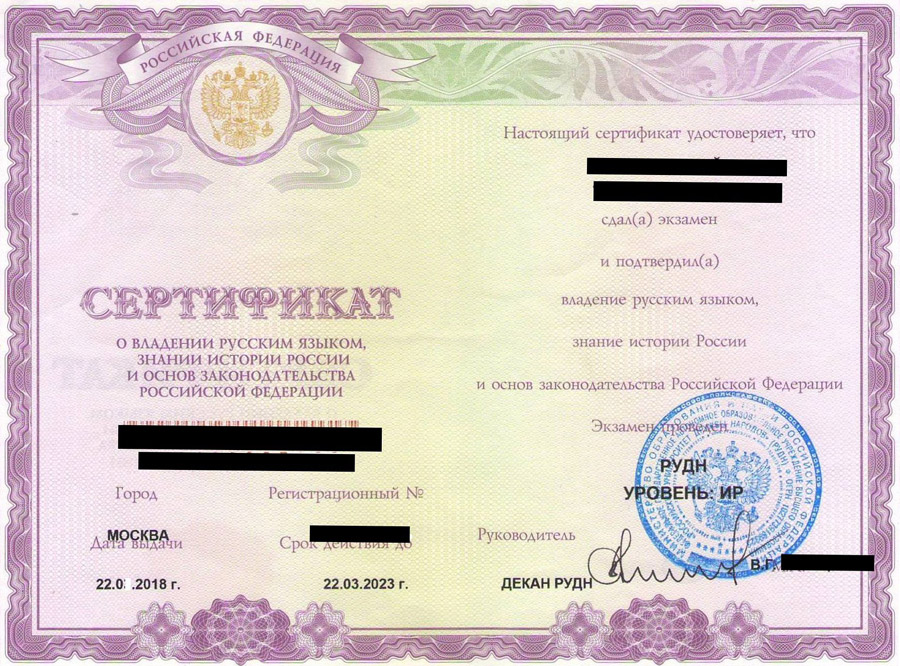
Russian Birth Certificate Certified Translation
There is an argument that, despite a relatively small contribution to the UK economy (as discussed in Chapter 3), agriculture plays a public value role in maintaining food security through supporting domestic food production levels. The SWV is currently only available to foreign workers wanting to undertake jobs within horticulture (ornamental and edible), or poultry farming. Much of this research was undertaken whilst the future of the scheme was in doubt, prior to the announcement of a 5-year extension to the scheme (and an expected tapering of visa numbers in order to encourage automation and domestic recruitment) announced by the previous government in May 2024. Materials translated range from legal, technical and financial documents, to marketing and advertising materials, product manuals and much more. RusTranslationService UK translate works of fiction and non-fiction, while subtitlers translate dialogue on films, TV and video games. You can specialise in an area that interests you, but you must first make sure that a demand exists.
Chapter 6: Recommendations
- 78% of horticulture and 79% of poultry members responding to a survey carried out by the NFU in response to our CfE did not believe automation would be available within 5 years.
- On many farms the packhouse was popular because people preferred the conditions or found the work easier, indicating that pay was not the only factor workers considered.
- Respondents to our CfE acknowledged that the minimal English skills of many Seasonal Workers leaves them more open to abuse, less aware of their rights, and potentially less likely to raise a complaint.
- As shown in Figure 4.6, currently most workers do not transfer between employers, but this might increase if the visa was longer, meaning that a larger group of employers would need to deal with the pro-rating of IHS costs.
Scheme operators are allocated a share of the overall Seasonal Worker quota (for 2024 most horticulture scheme operators received 7,500 each and 1,000 each for the 2 scheme operators recruiting for poultry), but in previous years this has varied. This represents their individual ceiling number of Certificates of Sponsorship (CoS) when the overall yearly quota is opened. Once the scheme operators have identified the employees whom they wish to ‘sponsor’ to come to work in the UK, they assign a CoS to the worker and the worker uses this CoS to make their application online. Scheme operators use different charging models, for example a flat weekly rate or an upfront cost and lower weekly rate.
THE UK’S PREMIUM TRANSLATION SERVICE PROVIDER
Recruitment from Ukraine represented the majority of SWS recruitment prior to 2021, and now represents less than 10% of the total intake. However, Defra has produced a diagram (Figure 2.4 below) that summarises some of the key organisational and enforcement relationships. When Seasonal Workers transfer or return to their home countries at the end of the visa, any annual leave accrued but not taken must be paid to them at their normal working rate. Seasonal Workers should not have to work more than 48 hours a week, including any overtime, unless by choice.
How the scheme is organised
In our analysis of the 2022 Defra Seasonal Workers survey (Table 2.1), 86% self-reported working on average more than 35 hours a week – most commonly this was either hours a week or hours, with 14% working over 50 hours a week. Around 10% of respondents to the 2022 Defra Seasonal Workers survey were unhappy with their hours (free text responses indicated this may be was due to a lack of hours rather than the reverse). On the other hand, too many hours could have a negative impact on workers such as being exhausted which is potentially dangerous.
In addition, Defra’s review into Automation in horticulture argues it can be challenging to raise funds through external investors or grants, suggesting the technology is insufficiently advanced, and therefore carries unpalatable risk, discouraging investment. Whilst there is evidence of grants offering support these are often unsuitable for horticultural automation. Technical and business knowledge across horticultural stakeholders varies significantly and hinders the adoption of new technologies. The skills required to develop, install, operate, and maintain the next generation of automation technologies will likely be science, technology, engineering, and mathematics (STEM) based.
During 2023, 125 farms out of around 500 (around 25%) were visited by UKVI enforcement teams, including interviewing 1,116 migrants on the route (representing around 3.4% of Seasonal Workers). On some of these inspections UKVI staff are accompanied by GLAA staff who check safeguarding, complaints and information provisions. To translate a birth certificate for a UK visa, Diplomat Translation offers a straightforward process. Simply submit the birth certificate online, specify translation requirements, and receive a professionally translated and certified document suitable for UK visa applications.
As an example of the costs involved, we were shown a packing plant at a large edible horticulture businessthat had three packing machines. Although the newest version was considerably more efficient, the business continued to use the older versions as replacing them would cost £250,000. The labour intensity for each farm type, split by casual and regular workers is visualised below. Horticulture is currently by far the most labour-intensive sector within farming and uses the most casual labour, with 5.8 regular workers and 3.9 casual workers per farm. However, this labour requirement is not fixed, and it is possible this could be reduced with additional automation within horticulture, something discussed in more detail later. A Russian certified translation is where a document or contract has been translated by a qualified Russian translator and an attestation of their credentials and/or the Russian translation agency for whom they work are appended or attached to the translation itself.
The respondents of the 2022 Defra Seasonal Workers survey also said they had received adequate information on their pay and potential reductions to pay (91% and 81% respectively) before coming to the UK. Returning Seasonal Workers we spoke to said that the recruitment presentation accurately represented pay and deductions. The data indicates that while most workers had a good experience, some workers did have problems receiving the pay they had expected. Following the 2019 joint Department for Environment, Food and Rural Affairs (Defra) and Home Office review of the scheme, the Home Office updated guidance to recognise the high risk nature of the seasonal work and the risk of exploitation. As a result, route requirements not only focus on immigration compliance, but also worker welfare across various dimensions. Similar information and paperwork, with some operators’ differing criteria and requirements being difficult to understand.